Foreword by the Executive Board
Foreword by the Executive Board
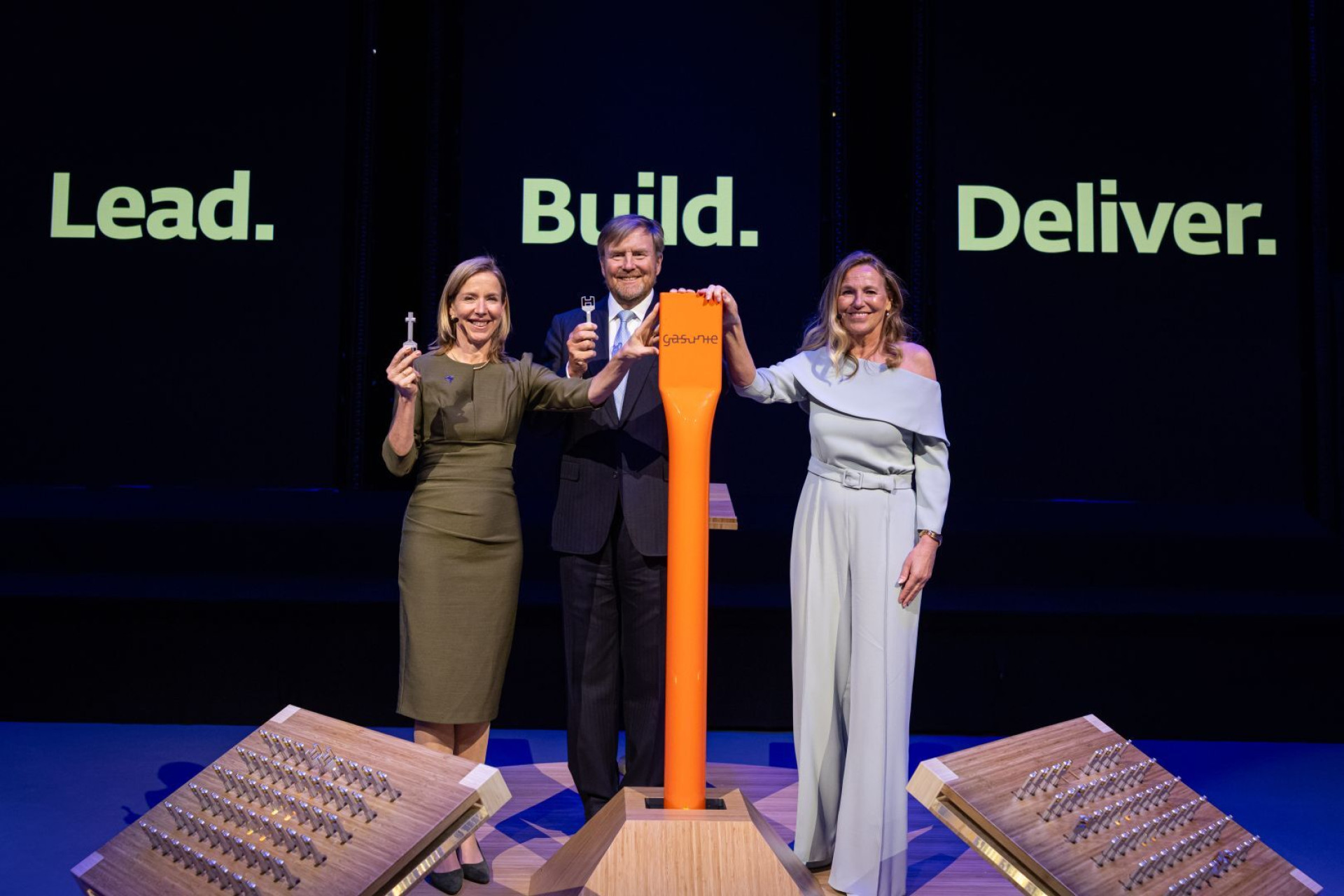
Lead, build, deliver
The first half of 2026 once again demonstrated the need for Europe to continue building an energy system that is reliable, affordable and sustainable. International energy markets react strongly to geopolitical tensions, such as those in the Middle East. While the direct impact on the European gas market was more limited than on fuel markets, it still shows how important it is to fix the vulnerabilities in our energy system.
For Gasunie, this means we must strike the right balance between reliability, affordability and sustainability. That is why our strategy focuses on building the energy system of the future while also providing energy security today. We lead important societal decisions, we build infrastructure on time, and we deliver results. In the first six months of 2026, we have made important steps in executing our strategy.
It is not only about new projects. We also reuse existing infrastructure and work together with partners. In this way, we keep the energy transition affordable and realistic for citizens, companies and society. In all our projects, we strengthen both the current- and the future system.
Lead
Gasunie helps policymakers, regulators and the market make informed choices for a reliable and affordable energy system. An example of this are the gas storage facilities. Europe must find a balance between security and a well-functioning market. In March, Gasunie Transport Services () published an analysis about how resilient the gas network in Europe and the Netherlands is during prolonged disruptions. This analysis also put forward several practical proposals to improve the system.
Gas storage sites, especially in the Netherlands, are being filled at a slower rate than expected this year. We will continue to draw attention to this, as storage facilities can only be filled gradually.
At the same time, we provide new insights into the future energy system. We see many opportunities in a hybrid energy system. This means electricity, gas and sustainable energy carriers working together. This can reduce problems in the electricity network, bring down electricity costs and support the economy. Capturing and storing CO2 (mainly from production) is one of the most cost-effective near-term options, according to a Gasunie-commissioned PwC study. Other options for industry include hybrid boilers, green gas and direct electrification. For households, hybrid heat pumps offer an affordable way to reduce CO2 and, at the same, support a flexible energy system.
Build
For the future energy system, it is important that infrastructure is ready to support demand and supply. That is why Gasunie invests early. This helps to prevent mismatches between supply and demand. We combine investment certainty with a strong focus on affordability, predictability and careful risk management.
Gasunie Deutschland is converting existing gas pipelines into hydrogen pipelines at a fast pace. Clear agreements about tariffs for early users help companies to join earlier and reserve capacity. This supports faster development of the hydrogen market. It gives clarity to investors and confidence to users.
The WarmtelinQ heat network project recently reached a construction milestone in Leiden. Heat that was previously lost will soon get a new lease of life: domestically produced sustainable energy that helps ease the pressure on the electricity grid.
Despite the previously announced delay by Porthos, the project has made progress in the first half of 2026. Porthos has completed work on offshore wells and is moving closer to storing CO2 under the North Sea. In addition, partners in the Delta Rhine Corridor project have made agreements on cross-border transport of captured CO2. This is an important basis for the future.
These projects improve energy supply, help industry reduce CO2 emissions and strengthen Europe. They show that our energy infrastructure can support reliability, affordability and sustainability all at the same time.
Deliver
Gasunie turns strategy into visible results. In May, an important step was taken with the opening of the hydrogen network in the port of Rotterdam. King Willem-Alexander attended this event. This project is the start of a larger network that connects industry, storage and other countries.
At Gate terminal in Rotterdam, the fourth tank is almost ready. Work at German in Brunsbüttel is also progressing well. In May, Gasunie and Vopak took the investment decision to keep EemsEnergyTerminal operational until 2036 under certain conditions. All three projects help to maintain energy supply secure during the transition to a sustainable energy system.
Working together
Gasunie cannot complete the energy transition alone. It requires close cooperation with governments, regulators, companies and society. We work with partners at the local, national and international levels, including in Germany, Belgium, the United Kingdom and across the European Union. The opening of the hydrogen network in Rotterdam showed just how important cooperation is. With the support of the Dutch government, Gasunie subsidiary HyStock is one step further in the development process for the Netherlands first large-scale hydrogen storage facility, across four salt caverns near Zuidwending.
Towards 2030 and beyond
‘Lead, build and deliver’ is more than just a slogan. It shows how Gasunie works. We lead key decisions, build infrastructure and deliver visible results. In this way, we contribute to energy security, support industry and households and help achieve climate goals. We do this together with governments, companies and more than 3,000 employees. Together, we are building an energy system that is reliable, affordable and sustainable – now and in the future.
Willemien Terpstra, Katie Slipper, Hans Coenen, Marc van der Linden and Bart Leenders.